Guide
Famous statues produced from Parian white marble
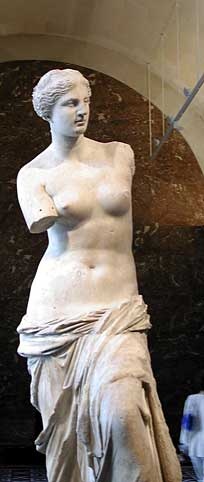 Venus (or Aphrodite) de Milo – Musée du Louvre
Ancient statue of Aphrodite, now in Paris at the Louvre Museum. Carved by a sculptor of Antioch on the Maeander River in about 150 BC, it was found on the Aegean island of Melos in 1820. The general composition derives from a 4th-century Corinthian statue. The action and modernized drapery give the Venus great nobility. The statue is a conspicuous example of the Hellenistic sculptural tradition's academic traits and close reliance on older masterpieces.
source: http://www.britannica.com
Aphrodite
Ancient Greek goddess of sexual love and beauty, identified by the Romans with Venus ( q.v. ). Because the Greek word aphros means “foam,” the legend arose that Aphrodite was born from the white foam produced by the severed genitals of Uranus (Heaven), after his son Cronus threw them into the sea. Aphrodite was, in fact, widely worshiped as a goddess of the sea and of seafaring; she was also honoured as a goddess of war, especially at Sparta, Thebes, Cyprus, and other places. Aphrodite was, however, primarily a goddess of love and fertility and even occasionally presided over marriage. Although prostitutes considered Aphrodite their patron, her public cult was generally solemn and even austere.
source: http://www.britannica.com
• Victory of Samothrace The Winged Victory of Samothrace, Louvre
• Hermes of Praxiteles Museum at Olympia